An Introduction to Orchidology
Created by Arthur Paternoster copyright 2026
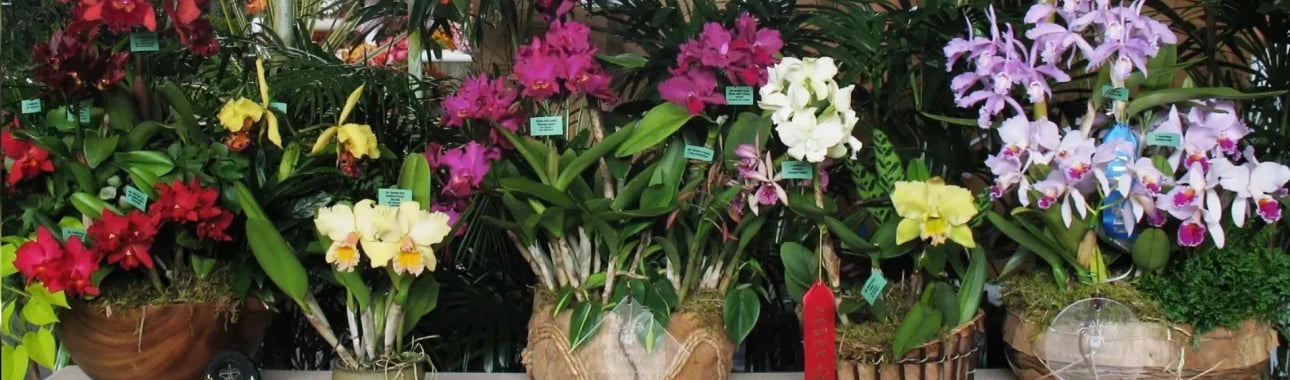
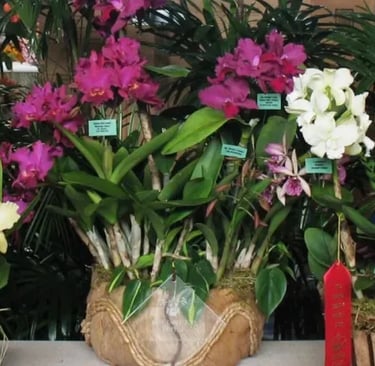
Details of the anatomy of an orchid and a vibrant collection showcasing stunning orchid varieties with their unique names.


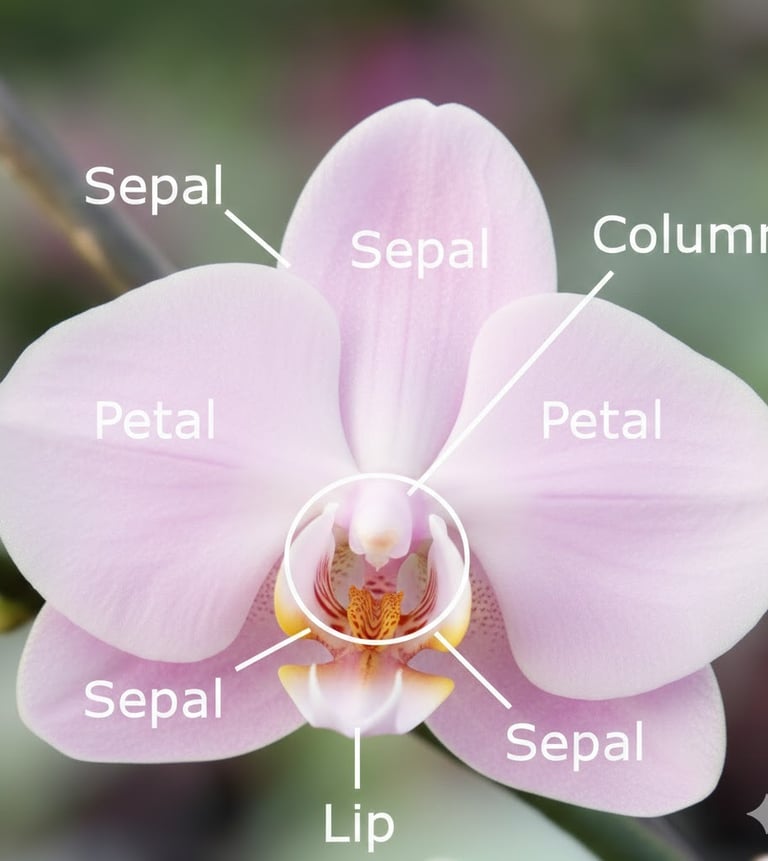
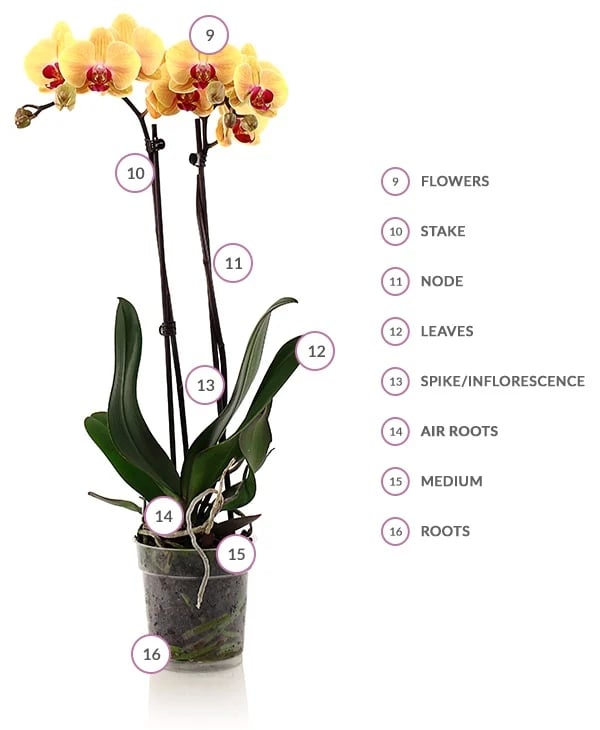
Orchid anatomy is characterized by a unique, highly specialised structure designed for specific, often insect-driven, pollination methods. Key defining features include a tripartite structure (parts in threes), a fusion of reproductive organs into a "column," and a specialized landing petal called the "labellum".
Flower Anatomy (The Bloom)
Orchid flowers are bilaterally symmetrical (left and right sides are mirror images) and consist of the following parts:
Sepals: There are usually three outer, often leaf-like, structures that protect the bud before it opens. The top one is the "dorsal sepal," and the two lower ones are "lateral sepals".
Petals: There are three, but they are not identical. Two are standard petals, while the third is highly modified into a "lip".
Lip or Labellum: The third, highly specialized bottom petal. It serves as a landing platform for pollinators and can be ornate, pouch-shaped, or colorful.
Column: The defining feature of an orchid. Unlike other flowers, the male (anther) and female (stigma) reproductive parts are fused into this single, central, column-like structure.
Pollinia: Instead of powdery pollen, orchids produce packets of pollen called pollinia located at the top of the column under an anther cap.
Here are the primary parts of an orchid plant (excluding the flower) and their functions:
Roots: Orchid roots are distinct from those of common garden plants. Most orchids are epiphytic (growing on trees), so their roots are adapted for exposure to air.
Rhizome: The rhizome is a horizontal stem that grows along the surface of the potting medium or tree bark. Function: It serves as the "backbone" of the plant, connecting the different sections (leads) of a sympodial orchid. It produces new growth and roots at various intervals, allowing the plant to spread.
Leaves: Orchid leaves vary wildly in shape—from thin and grass-like to thick, leathery, and succulent.
Stems (Monopodial vs. Sympodial)
Depending on the type of orchid, the stem serves different structural purposes:
Inflorescence: (the spike) The entire flowering stalk, which includes the pedicel (flower stalk) and peduncle (main stem).
In the Australian commercial market, Cymbidium, Dendrobium, and Phalaenopsis dominate. While they share the "exotic" look, they have vastly different growth habits and environmental needs.
The main difference lies in how they handle the Australian climate and where they store their energy.
1. Cymbidium (Boat Orchid)
These are the rugged "outdoor" favorites of Australian gardeners, especially in cooler, temperate states like Victoria, South Australia, and southern WA.
Growth Habit: They are sympodial and grow in large, grass-like clumps. They have large, round pseudobulbs at the base for massive water storage.
Leaves: Long, thin, and strappy (often described as "grassy").
Climate: They are cool-growing. In fact, they usually require a significant drop in night temperature (around 10°C) in late summer or autumn to trigger flower spikes.
Commercial Use: Popular as large potted patio plants and high-end, long-lasting cut flowers.
2. Dendrobium (Rock/Cane Orchid)
This is a massive group, but the commercial types in Australia are usually "Hard-cane" (like the Cooktown Orchid) or "Soft-cane."
Growth Habit: Also sympodial, but instead of round bulbs, they grow tall, vertical canes (elongated pseudobulbs).
Leaves: Leathery leaves grow along the length of the cane, rather than just from the base.
Climate: Varies by type. Australian natives like D. kingianum are "cool-growing" and very hardy. However, the tropical "Phalaenopsis-type" Dendrobiums seen in florists prefer warmth and high humidity.
Commercial Use: Known for having many small flowers on a single arching spike; often used as garnishes or in multi-flower bouquets.
3. Phalaenopsis (Moth Orchid)
The undisputed king of the "indoor" market. If you buy an orchid at a supermarket or hardware store in Australia, it is likely a Phalaenopsis.
Growth Habit: They are monopodial, meaning they grow from a single upward point. They do not have pseudobulbs for storage.
Leaves: Broad, flat, succulent leaves that grow in a "fan" shape from the center.
Climate: They are warm-growing and tropical. They hate temperatures below 15°C and thrive in the stable temperatures found inside a modern Australian home.
Commercial Use: Sold primarily as long-blooming indoor decor. The flowers can last 3 months or more on the plant.


In orchidology, NPK represents the three primary macronutrients required for plant health: Nitrogen (N), Phosphorus (P), and Potassium (K).
While all plants need these, orchids have a unique metabolic pace. Because they often grow in nutrient-poor environments (like tree bark or sandy South West soils), their relationship with these elements is a delicate balance of "just enough" rather than "more is better."
1. The Trinity of Nutrients
N – Nitrogen: The Engine of Greenery
Nitrogen is the primary driver of vegetative growth. It is a core component of chlorophyll, the molecule that allows the orchid to turn sunlight into energy.
What it does: Promotes strong, lush green leaves and the development of new pseudo-bulbs.
Orchid Specifics: In the "South West we use Nitrogen to build the "solar panels" (leaves) of the plant. However, too much Nitrogen leads to "soft" growth that is easily attacked by pests or fungal rot.
The Sign of Deficiency: Lower leaves turning yellow (chlorosis) while the rest of the plant looks stunted.
P – Phosphorus: The Architect of Blooms
Phosphorus is essential for energy transfer (ATP) and the development of reproductive tissues.
What it does: Encourages root development and, most importantly for enthusiasts, the initiation of flower spikes.
Orchid Specifics: High-phosphorus fertilizers (often called "Bloom Boosters") are typically used when the orchid is entering its flowering cycle. It helps the plant manage the massive energy tax of producing a bloom.
The Sign of Deficiency: A lack of flowers despite healthy-looking leaves, or a dull, purplish tint on the underside of older leaves.
K – Potassium: The Immune System
Potassium acts as a regulator for the plant's internal "plumbing." It controls the opening and closing of stomata (pores) and the movement of water and minerals.
What it does: Strengthens cell walls, making the orchid more resilient to temperature swings and disease. It is the "finishing" nutrient that toughens the plant.
Orchid Specifics: In Western Australia’s fluctuating climate, Potassium is vital for helping the plant survive the transition from a wet winter to a dry, scorching summer.
The Sign of Deficiency: Weak stems that flop over, or "leaf tip burn" where the edges of the leaves look scorched.
2. Understanding the "Ratio"
On any fertilizer bottle, you will see three numbers (e.g., 20-20-20 or 10-30-20). These represent the percentage of N, P, and K by weight.
Type Ratio Example When to Use Balanced 20-20-20 General maintenance during the active growing season.High Nitrogen30-10-10Best for orchids in bark-based media, as decaying bark consumes nitrogen. Bloom Booster10-30-20Used in late summer/autumn to "trigger" the spike for spring.
3. The "Weakly Weekly" Strategy
In orchidology, we often say "Weakly, Weekly." Because orchids are epiphytes or specialized terrestrials, they cannot handle high concentrations of salts.
The Process: Use a highly diluted fertilizer (usually 1/4 or 1/2 the recommended dose) every time you water during the growing season.
The Flush: Once a month, use plain rain water to "flush" the pots. This removes the build-up of mineral salts that can burn the sensitive orchid roots.
4. The Biological Partner: The AMF Connection
While NPK is the "food," we must remember the Arbuscular Mycorrhizal Fungi (AMF). In the wild, terrestrial orchids don't just "eat" NPK; they trade carbon with fungi to get these nutrients from the soil. In our workshops, we focus on ensuring the media allows these fungi to thrive, as they make the NPK significantly more bio-available to the plant's roots.
Essential Orchid Prompts for AI
If you're looking to use AI to troubleshoot or plan your orchid garden, try these specific prompts to get the best advice:
General Care: "I just bought a Phalaenopsis orchid. Create a weekly maintenance checklist for a beginner living in a [dry/humid] climate."
Feeding: "Explain the NPK ratio for orchids and recommend a fertilizing schedule for the dormant winter season versus the active spring season."
Troubleshooting: "My orchid leaves are turning yellow and feel mushy at the base. Diagnoses the issue and provide a step-by-step recovery plan."
Reblooming: "My orchid finished blooming three months ago and the spike is brown. How and where should I prune it to encourage a new flower spike?"
Repotting: "List the materials needed and provide a guide on how to repot an orchid that has outgrown its bark medium without damaging the aerial roots."
Environment: "What are the ideal humidity and temperature ranges for a Cattleya orchid, and how can I achieve these in a standard apartment?"
Pest Control: "I see tiny white webs on my orchid leaves. Identify the pest and suggest organic ways to eliminate them without harming the plant."
Advanced Methods: "Explain the pros and cons of 'Semi-Water Culture' (hydroponics) for orchids compared to traditional bark-based potting."
Species Specific: "Compare the care requirements of a Vanda orchid versus a Dendrobium orchid regarding light and watering."
Aesthetic/Design: "Suggest five companion plants that thrive in the same conditions as orchids to create a cohesive indoor tropical display."


The Secret Best Friend of the Orchid: A Simple Guide to AMF
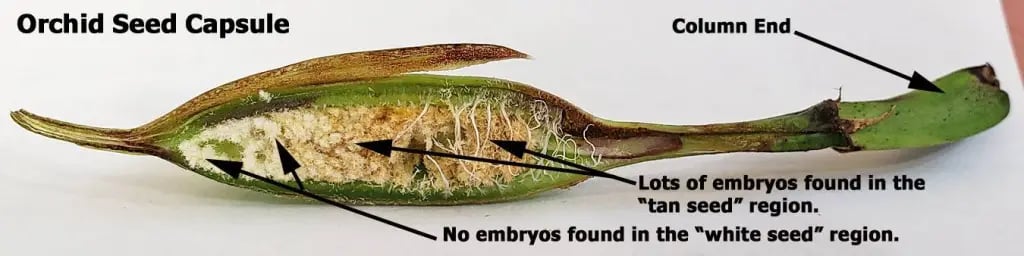
If you’ve ever looked at an orchid seed, you’ve probably noticed something strange: it looks like a tiny speck of dust. Unlike a bean or a sunflower seed, an orchid seed has no "lunchbox." It carries zero food inside it to help it grow. So, how does a tiny speck of dust turn into a beautiful flower in the Australian bush? It uses a secret partner called AMF.
What is AMF? AMF stands for Arbuscular Mycorrhizal Fungi. Think of it as a friendly underground mushroom. While most of us think of fungi as things that rot old bread, AMF is a "helper" fungus. It lives in the soil and reaches out with tiny, microscopic threads.
The "Trade" That Saves Lives
Because the orchid seed is too small to have its own energy, it can't grow roots or leaves on its own. It needs a jumpstart. Here is how the partnership works:
The Hookup: The tiny orchid seed lands on a piece of bark or soil. If it's lucky, it meets the AMF fungus.
The Invasion: The fungus actually grows into the orchid seed. In any other plant, this would be a disease, but for the orchid, it’s a lifeline.
The Food Delivery: The fungus is an expert at finding water and minerals in the ground. It "feeds" the baby orchid the sugars and nutrients it needs to grow its first leaf.
The Partnership: Once the orchid grows leaves and can make its own food from the sun, it pays the fungus back by sharing some of its own sugar.
Why Does This Matter to You? In the Australian bush, orchids have been doing this dance for millions of years. This is why "Native" orchids can sometimes be tricky to grow at home—if you use harsh chemicals or the wrong soil, you might accidentally kill the friendly fungus that the orchid is relying on.
When we talk about using Organic Native Fertilizers, we are doing it for the fungus! Chemical fertilizers are like "fast food" for the plant, but they can make the fungus "lazy" or even kill it. By using organic foods (like the ones in our database), you are feeding the fungus, which in turn keeps your orchid strong, healthy, and resilient against the Australian heat.
Summary for the Layperson:
Orchid Seeds = Tiny specks with no food.
AMF = An underground delivery service that brings them lunch.
Propagation = Without this "best friend" fungus, most wild orchids would never even start to grow.
The Lesson: Look after your soil and your fungus, and they will look after your orchids!
Diversity, Distribution, and Applications of Arbuscular Mycorrhizal Fungi in South West Western Australia
Executive Summary
South West Western Australia (SWWA) is a global biodiversity hotspot characterised by some of the most nutrient-impoverished soils on Earth. In these OCBILs (Old, Climatically Buffered, Infertile Landscapes), Arbuscular Mycorrhizal Fungi (AMF) play a critical role in plant survival. This report explores the unique diversity of AMF in the region, their distribution across various soil types from the Swan Coastal Plain to the Darling Scarp, and their burgeoning applications in land restoration and sustainable agriculture.
1. Introduction
Arbuscular Mycorrhizal Fungi (AMF) of the phylum Glomeromycota form symbiotic relationships with approximately 80% of terrestrial plant species. In SWWA, where phosphorus (P) availability is often the primary limiting factor for plant growth, these fungi extend the reach of root systems via hyphal networks, facilitating the uptake of immobile nutrients in exchange for photosynthetically derived carbon.
2. Diversity of AMF in SWWA
The SWWA region hosts a distinct suite of AMF taxa, many of which have co-evolved with endemic flora such as members of the Fabaceae, Myrtaceae, and Orchidaceae families.
2.1 Taxonomic Composition
Dominant Genera: Surveys of SWWA soils frequently identify high abundances of Glomus, Acaulospora, and Scutellospora.
Endemism: Preliminary molecular studies suggest that SWWA may harbor "cryptic" diversity—AMF species that are morphologically similar to global taxa but genetically distinct due to long-term isolation.
Host Specificity: Unlike the traditional view of AMF as generalists, in the high-diversity kwongan heathlands, there is evidence of preferential associations between specific AMF lineages and rare plant species.
2.2 Functional Diversity
Beyond nutrient uptake, AMF in SWWA provide: Drought Tolerance: Vital for surviving the Mediterranean climate’s long, dry summers.Pathogen Protection: Form physical and chemical barriers against soil-borne pathogens like Phytophthora cinnamomi (Dieback).
3. Distribution Across Landscapes
The distribution of AMF in SWWA is heavily influenced by the age of the soil (chronosequences) and the rainfall gradient.
Region Soil Characteristics AMF Characteristics
Swan Coastal Plain: Sandy, highly leached (Karrakatta/Bassendean dunes). Low spore density; high reliance on extensive hyphal networks for P-capture.
Darling Scarp: Lateritic, iron-rich gravels. High diversity of Acaulospora; adapted to acidic soil conditions.
Jarrah/Karri Forests: High organic matter; higher rainfall. Diverse fungal communities; complex interactions with ectomycorrhizal (ECM) fungi.
Wheatbelt: Saline-affected; fragmented remnants. Reduced diversity in agricultural soils; salt-tolerant strains found in remnant saline seeps.
4. Applications and Management
4.1 Ecological Restoration
Post-mining restoration (e.g., Alcoa bauxite mines or sand mining on the coast) relies heavily on re-establishing soil microbial life.
Inoculation: Using "topsoil transfer" to move native AMF propagules to disturbed sites.
Seed Coating: Developing technologies to coat native seeds (e.g., Acacia spp.) with AMF spores to improve seedling recruitment in degraded landscapes.
4.2 Agriculture and Viticulture
In the Margaret River wine region and the Great Southern wheatbelt, AMF are being utilised to reduce reliance on chemical fertilisers.
Phosphorus Efficiency: Utilising native AMF to "unlock" legacy phosphorus bound in the soil from decades of superphosphate application.
Soil Structure: AMF produce glomalin, a glycoprotein that acts as "soil glue," improving aggregate stability and water-holding capacity in sandy SWWA soils.
4.3 Native Orchid Conservation
SWWA is world-renowned for its terrestrial orchids. While orchids primarily utilise orchid mycorrhizal fungi (OMF) for germination, many adult plants maintain tripartite symbioses involving AMF to bolster nutrient intake in competitive environments.
5. Challenges and Future Directions
Climate Change: Rising temperatures and decreasing rainfall in SWWA may shift AMF community compositions, potentially favouring more drought-tolerant but less nutrient-efficient species. Invasive Species: Non-native weeds often bring "ruderal" AMF species that may outcompete native fungal lineages, altering the trajectory of native plant recovery. Molecular Mapping: There is an urgent need for high-throughput DNA sequencing (metabarcoding) of SWWA soils to fully catalogue the region's fungal "dark matter."
6. Conclusion Arbuscular Mycorrhizal Fungi are the "hidden architects" of the South West Australian landscape. Understanding their diversity and distribution is not merely an academic exercise but a necessity for the long-term conservation of the region's unique flora and the sustainability of its primary industries.
References & Recommended Reading:
Lambers, H. (2014). Plant Life on the Sandplains in Southwest Australia.
Brundrett, M. C. (2009). Mycorrhizal associations and other means of nutrition of vascular plants.
Bunbury, Geographe, and Swan Coastal Plain soil surveys (DPIRD).
Orchid Beauty
A glimpse into the delicate world of orchid varieties.


In the realm of horticulture, the orchid is often viewed with a mix of awe and trepidation. They are frequently labeled "difficult" or "fussy." However, from a therapeutic perspective, it is precisely this complexity that makes the orchid a perfect vessel for practicing mindfulness.
Mindfulness is the practice of intentionally focusing your attention on the present moment with a sense of curiosity and without passing judgment. It serves as a vital tool for a healthy life by reducing chronic stress and preventing the mind from becoming overwhelmed by past regrets or future anxieties. By fostering this mental clarity, you can break reactive habits and make more conscious, balanced choices that improve both your emotional resilience and physical well-being.
To develop an interest in orchids is to enter into a contract with the present moment. Unlike faster-growing flora, orchids operate on a timeline that demands a radical shift in our internal pace.
Mindfulness is essentially the practice of "paying attention, on purpose, in the present moment." When caring for an orchid, generalities will not suffice. You cannot simply "water the plant." You must observe:
The silvering of the roots: A signal of thirst.
The turgor of the leaf: A measure of resilience.
The subtle shift in crown colour: A warning of excess.
This "attuned observation" mirrors the therapeutic process of checking in with one's own body. By learning to read the silent language of a Phalaenopsis or a Cattleya, we sharpen our ability to read our own internal states of tension or depletion.
We live in a culture of "doing." Mindfulness invites us into "being." Orchids are the masters of the long game. A single spike may take months to develop; a bloom may last for twelve weeks, followed by a year of apparent dormancy.
In therapy, we often encounter the "dormant" phases of our own growth—periods where it feels as though nothing is happening despite our best efforts. Cultivating orchids teaches us that quietude is not the absence of growth, but the preparation for it. To wait for a bloom without resentment is a profound exercise in non-striving.
The orchid is an epiphyte; in the wild, it clings to trees, drawing its sustenance from the air and the rain. It is a lesson in vulnerability. It does not hide in the dirt; its roots are exposed.
Developing a therapeutic interest in these plants allows us to externalize our own feelings of fragility. When we provide the right environment—the balanced light, the rhythmic airflow, the precise humidity—and see the plant thrive, we reinforce the belief that we, too, are environment-dependent. We learn that "failing to thrive" is often not a character flaw of the plant (or the person), but a misalignment of the surrounding conditions.
The daily or weekly "walk-through" of an orchid collection becomes a moving meditation. The tactile sensation of the bark media, the visual feast of the intricate blooms, and the deliberate movements required to avoid damaging delicate spikes all serve to ground the practitioner in the "here and now."
Conclusion: The Bloom as a Byproduct
In "Orchid Mindfulness," the bloom is not the goal; the relationship is. When we stop obsessing over the flower and start focusing on the health of the roots, the bloom eventually arrives as a natural consequence.
This is perhaps the greatest therapeutic lesson the orchid offers: Focus on the foundations of your well-being, and the beauty in your life will take care of its own flowering.
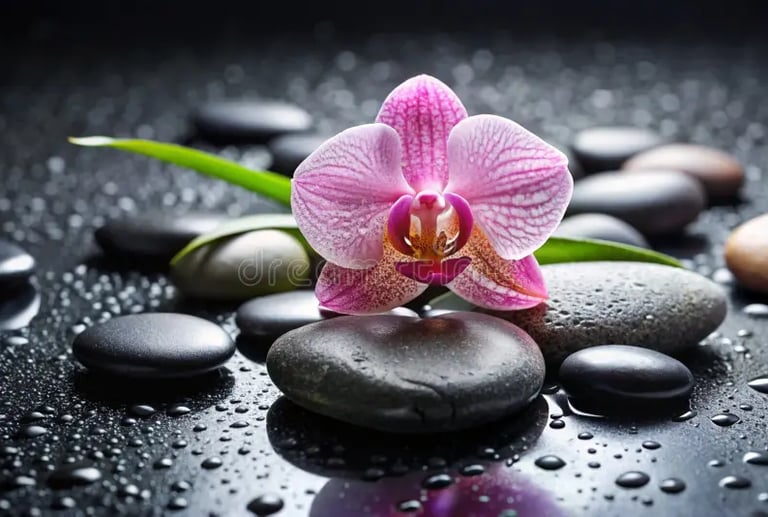





The Orchid Path: Cultivation as Mindfulness Therapy

How orchids are judged
Orchid judges evaluate orchids based on strict, standardized criteria (often out of 100 points) focusing on shape, colour, substance/texture, size, and floriferousness. They compare the plant against the ideal characteristics of its species or hybrid type, assessing its quality, symmetry, and presentation. The goal is to identify superior quality compared to previous, similar flowers.
Key Criteria in Orchid Judging:
Shape: Judges prefer a full, rounded, and symmetrical flower, which is often considered the most important factor.
Color: Focuses on clarity, brilliance, and distinctiveness.
Substance & Texture: Refers to the thickness and durability of the petals and their surface quality.
Size: Measured against established benchmarks for that specific type.
Flower Count (Floriferousness): More flowers on the inflorescence are typically better.
Presentation & Arrangement: How well the flowers are presented on the stem, including spacing and stability.
Awards and certificates
Based on the scores, judges award various certifications:
FCC (First Class Certificate): 90+ points.
AM (Award of Merit): 80–89 points.
HCC (Highly Commended Certificate): 75–79 points.
Cultural Awards: Given for exceptional plant care rather than just flower quality.
Judging Process:
Panel Assessment: A panel of accredited judges reviews the plant, with the final score representing a consensus among them.
Comparison: Judges use their knowledge of previous award winners to ensure consistency in standards.
Detailed Inspection: Judges examine the plant's health, foliage, and flower presentation, which may involve checking the plant's stability in its pot.